
Hearing that your child has a cavity can leave you with a lot of questions. Does a baby tooth really need a filling? Will it hurt? Is a silver crown normal for a four-year-old? This guide answers those questions for Abbotsford parents. It explains how children’s fillings differ from adult ones, which materials dentists use, what the appointment looks like, how to keep your child safe while they are numb, and what help is available with the cost.
Do Baby Teeth Really Need Fillings?
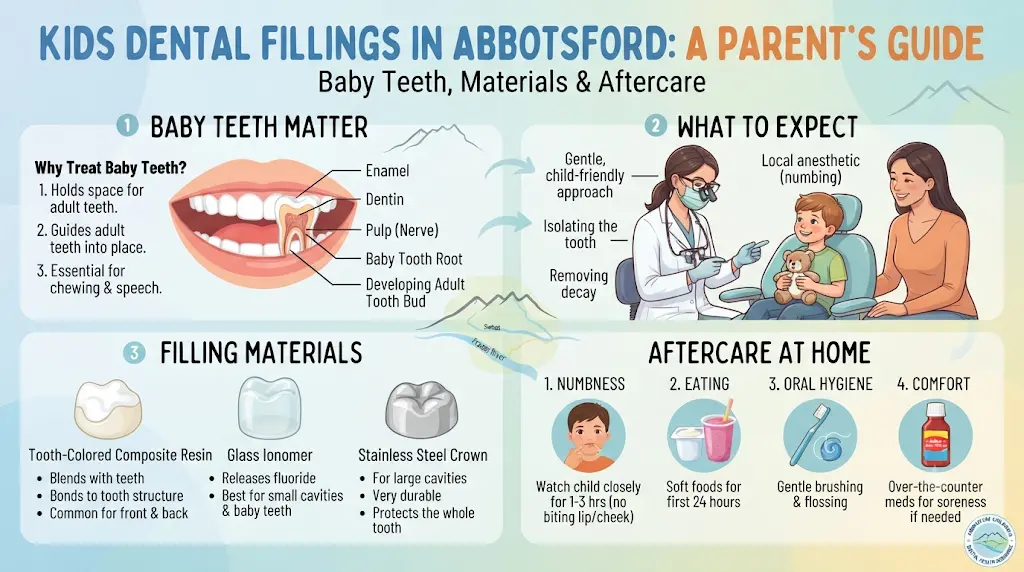
In most cases, yes. Once a hole has formed, a cavity does not heal on its own, and baby teeth stay in the mouth far longer than many parents expect. Baby molars are typically lost between about ages 10 and 12, so a cavity found in a four-year-old’s back tooth may need to hold up for six years or more.
An untreated cavity can cause pain, trouble chewing, and infection, and it can spread to neighbouring teeth. Baby teeth also hold space for the permanent teeth coming in behind them, which is why dentists try to keep them in place until they loosen naturally.
That said, not every spot needs drilling. Your dentist may recommend watching a very early or shallow area, or treating it with fluoride, while tracking it at each visit. The decision depends on the size and depth of the cavity, which tooth is involved, your child’s age, and how close the tooth is to falling out.
To understand why cavities form in young children, see is it normal for a 4-year-old to have cavities. For how fillings work in adult and permanent teeth, read our dental fillings guide for Abbotsford.
Signs Your Child May Need a Filling
Children often cannot describe tooth pain, so look for these clues:
- White, brown, or black spots, or a visible hole in a tooth
- Complaints about cold, hot, or sweet foods
- Chewing on one side or refusing harder foods
- Food that keeps getting stuck between the same teeth
- Crankiness at mealtimes, or waking at night with a sore tooth
Many cavities cause no symptoms at all, especially between teeth, which is why regular exams and X-rays matter. If you are still choosing a dentist for your child, our pediatric dentist checklist for Abbotsford parents is a good place to start.
How Children’s Fillings Differ From Adult Fillings
A child’s tooth is not just a smaller adult tooth. Baby teeth have thinner enamel, so decay can reach the nerve faster. Children also have less patience in the chair, and keeping a small mouth dry is hard. Dryness matters because composite resin is technique-sensitive and does not tolerate moisture well, so dentists sometimes choose a more moisture-tolerant material when a child cannot hold still for long.
A good pediatric treatment plan balances three things: the right material for the tooth, a procedure your child can cooperate with, and how long the repair needs to last. A restoration in a baby molar at age four has to last until that tooth falls out, which may be many years away. One in a tooth that is about to loosen has a shorter job.
Filling Materials Used for Baby Teeth
Your dentist will choose from several options depending on the cavity, your child’s age, and how well they can cooperate.
| Option | Best suited for | Strengths | Trade-offs |
|---|---|---|---|
| Composite resin | Small to moderate cavities on front or back teeth | Tooth-coloured and bonds to the tooth | Needs a dry tooth; less forgiving if the child moves |
| Glass ionomer or resin-modified glass ionomer | Smaller cavities, teeth that are hard to keep dry, lower-stress areas | Releases fluoride and tolerates some moisture | May not wear as well as composite on heavy chewing surfaces |
| Stainless steel crown | Large cavities or decay on two or more surfaces, especially baby molars | Very durable; protects the whole tooth; comes out with the baby tooth | Silver colour |
| Zirconia (tooth-coloured) crown | The same situations when appearance matters to the family | Tooth-coloured | Availability varies by clinic |
| Amalgam (silver) filling | Rarely chosen for baby teeth | Strong | Health Canada advises considering non-mercury materials for children’s baby teeth |
Dentists use stainless steel crowns on baby molars with large cavities because they hold up better than a filling when little healthy tooth remains. Parents sometimes hesitate over the silver colour, but the crown sits on a back tooth and is shed along with it. Our guide to the types of dental fillings compares the standard filling materials in more detail.
Filling, Crown, or Pulp Treatment: How Dentists Decide
The right treatment depends mainly on how deep and wide the decay is.
- Small cavity: a filling usually restores the tooth.
- Large or multi-surface cavity: a crown protects what remains, because a big filling in a thin-walled baby molar is more likely to fail.
- Decay that reaches the nerve: your child may need pulp treatment, sometimes called a baby root canal, before the tooth is restored. If infection has spread, extraction may be the safest option.
If a baby tooth has to come out early, the dentist may suggest a space maintainer, a small device that holds the gap open so the permanent tooth has room to come in. Ask what the plan is for each tooth and what could happen if you wait. For a look at how dentists weigh saving versus removing a tooth, see root canal or pull the tooth.
What Happens at a Child’s Filling Appointment
Every dentist works a little differently, but a typical visit looks like this:
- Explanation. The dentist describes what will happen in simple, honest words and may show your child the instruments.
- Numbing. Numbing gel goes on first, then a local anaesthetic so the tooth does not feel pain. Your child may feel pressure or vibration, but should not feel sharp pain.
- Keeping the tooth dry. A small rubber sheet or cotton rolls keep saliva away so the material can set properly.
- Removing decay. The dentist cleans out the damaged part of the tooth.
- Placing the filling or crown. Composite is hardened in layers with a blue light; a crown is fitted and cemented.
- Bite check. The dentist makes sure your child’s bite feels normal and polishes the tooth.
Appointments for young children are often kept short, and larger treatment plans may be split across several visits. If your child is very anxious, has several cavities, or cannot stay still, ask whether nitrous oxide, oral sedation, or another form of sedation is appropriate. Our page on sedation dentistry in Abbotsford explains the choices.
How to Prepare Your Child
Keep it short, honest, and calm. Tell your child the dentist will fix a tooth that has a hole in it, and that it will be numbed first. Avoid scary words like “shot” or “hurt,” and avoid promising it won’t feel like anything at all. Children pick up on a parent’s nerves, so your tone matters as much as your words. For more ideas on talking a young child through the visit, see our post on 4-year-olds and cavities.
Before the appointment, tell the clinic about your child’s health history, medications, allergies, and anything that made past dental visits difficult. Book a time when your child is usually rested and fed, and let the team know if they are unwell that day.
After the Filling: Protecting Your Child While They Are Numb
The biggest risk after a children’s filling is accidental biting. Numbness can last a few hours, and young children often chew or poke at a numb lip or cheek without noticing, which can leave a painful sore.
- Watch your child until the numbness wears off.
- Remind them not to bite, chew, or pick at their lip, cheek, or tongue.
- Hold off on chewy or crunchy foods until feeling returns. Our guide on when to eat after a dental filling covers timing and food choices.
- Expect mild sensitivity to temperature or pressure for a few days.
- If your child needs pain relief, ask your dentist or pharmacist which medication and dose suit their age and weight, and follow the label.
Call the clinic if your child has swelling, a fever, pain that is getting worse, a bite that feels high, or a filling or crown that feels loose or sharp.
How Long Do Children’s Fillings Last?
A filling in a baby tooth only has to last until the tooth falls out naturally, which for molars is typically around ages 10 to 12. Most do the job, but restorations in back baby teeth can wear or fail sooner if a child has many cavities, grinds their teeth, or is hard to keep clean. New decay can also start at the edge of an existing filling.
Permanent teeth are different. The first permanent molars arrive around age 6, behind the last baby molars, and a filling there needs to last for decades. Dentists often suggest sealants on these teeth to protect the grooves. Regular checkups let your dentist spot a worn filling before it becomes a problem, and our guide to the signs a filling needs replacing lists what to look for.
Cost and Coverage for Children’s Fillings in BC
What you pay depends on the tooth, the number of surfaces, the material (a crown costs more than a small filling), and whether sedation is needed. Ask the clinic for a written estimate before treatment, and ask why your child’s tooth needs a filling or a crown.
Several programs may help:
- Canadian Dental Care Plan (CDCP): children under 18 whose families do not have access to private dental insurance may qualify. A child’s eligibility is based on the parent’s or guardian’s eligibility.
- BC Healthy Kids Program: provides basic dental coverage for children under 19 in qualifying low-income families.
- Private or employer insurance: coverage for children’s fillings varies by plan, so check your policy.
Confirm your child’s eligibility with the program itself, and ask the clinic which plans it bills. Our guide to using your dental benefits before the year-end deadline explains how to get the most from insurance.
When a Child’s Tooth Problem Is an Emergency
Contact a dentist right away if your child has facial swelling, a fever with a toothache, a pimple-like bump on the gum, severe pain, or a tooth knocked, chipped, or loosened by a fall. Read our guide to a child dental emergency in Abbotsford for what to do first. If you need to be seen quickly, see our pages on emergency dental care and same-day emergency appointments, and our steps for handling a broken tooth.
Frequently Asked Questions
Do baby teeth need to be filled if they will fall out anyway?
Usually yes. Baby molars stay until about age 10 to 12, and an untreated cavity can cause pain and infection in the meantime. Your dentist may monitor a very small area instead.
Does a filling hurt a child?
The tooth is numbed first, so a child should feel pressure or vibration rather than pain. Soreness or sensitivity for a few days afterwards is common.
Can a child have a filling without sedation?
Many can. It depends on age, how many teeth need treatment, and how well your child can cooperate. Your dentist will assess this and discuss options if needed.
Are silver fillings used on children?
Amalgam is rarely the first choice for baby teeth. Health Canada advises that non-mercury filling materials be considered for children’s primary teeth, and many dentists use composite, glass ionomer, or crowns instead.
What is a stainless steel crown?
A prefabricated metal cap cemented over a badly decayed baby molar. It protects the whole tooth and falls out with it when the tooth is shed.
Can a tooth with a filling get another cavity?
Yes. Decay can start at the edge of a filling, and a child can develop new cavities in other teeth. Brushing with fluoride toothpaste, limiting sugary drinks and snacks, and regular checkups lower the risk.
Fillings for Kids at Medora Dental Care in Abbotsford
At Medora Dental Care, we can examine your child’s tooth, explain whether it needs a filling, a crown, or monitoring, and give you a clear estimate before treatment starts. Our clinic is at 110 – 1910 North Parallel Road, Abbotsford, BC V3G 2C6. Learn more about our clinic on our best dentist in Abbotsford page, then contact our team to book your child’s appointment.