
If your dentist just told you that you need a filling, the next question is almost always the same: which material should I choose? There are several types of dental fillings used in modern dentistry, and the right one depends on where the cavity is, how big it is, your budget, and how much you care about how it looks when you smile.
In this guide, we break down the three most common dental fillings — composite, amalgam, and ceramic — so you can walk into your next appointment already knowing what to ask.
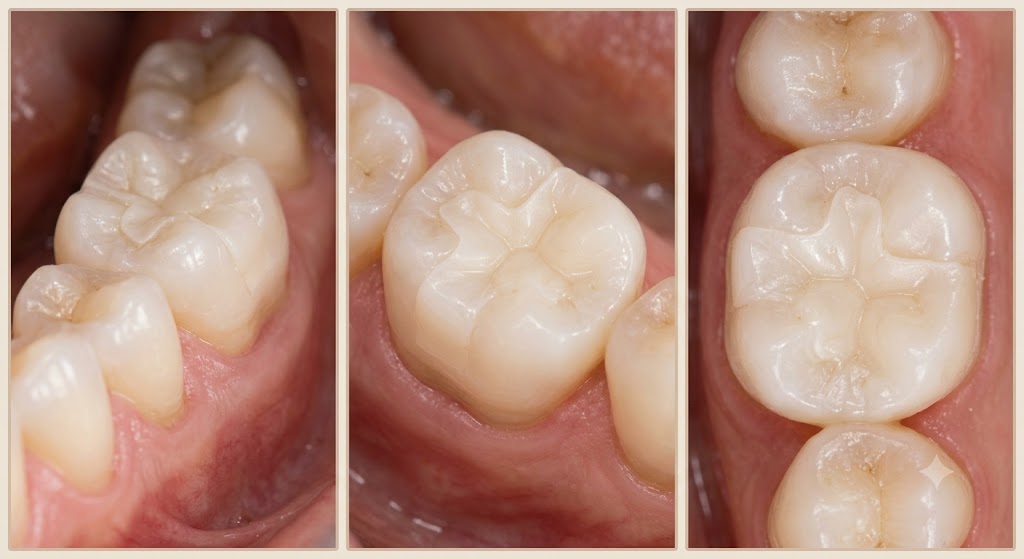
What Is a Dental Filling, and and What Types of Dental Fillings Exist?
A dental filling restores a tooth that has been damaged by decay, a crack, or wear. Once a dentist removes the decayed portion of the tooth, the resulting space needs to be filled with a durable material to restore its shape, strength, and function. Left untreated, a small cavity can progress into a much bigger problem, eventually requiring a root canal treatment or, in severe cases, tooth extraction. Catching decay early and choosing the right filling material is one of the simplest ways to protect a tooth for the long term.
Direct vs. Indirect Fillings
Before comparing materials, it helps to understand the two basic categories of fillings:
- Direct fillings are placed and shaped inside your mouth in a single visit. Composite and amalgam fillings fall into this category.
- Indirect fillings — including ceramic inlays, onlays, and dental crowns — are custom-fabricated in a lab or milled in-office, then bonded or cemented onto the tooth. These are typically used for larger cavities or teeth that have lost significant structure, and you can read more about them in our guide to dental inlays and onlays.
With that foundation in place, let’s look at each material.
Composite Fillings
Composite resin fillings are a mixture of powdered glass and plastic resin, tinted to match your natural tooth shade. They are the most commonly requested filling today, largely because they’re virtually invisible once placed.
How they’re placed: The dentist removes decay, applies a bonding agent, and layers the resin into the cavity, hardening each layer with a curing light before shaping and polishing the final result.
Pros:
- Blend in naturally with your surrounding teeth
- Bond directly to the tooth structure, which means less healthy tooth needs to be removed compared to amalgam
- Suitable for front teeth and any visible area of the smile
- Can also be used for minor cosmetic corrections, similar to the bonding techniques used in cosmetic dentistry
Cons:
- Less durable than amalgam or ceramic in high-pressure back teeth
- Can shrink slightly during curing, which occasionally leads to a marginal gap if not placed precisely
- Tends to wear or stain faster than ceramic over many years
Typical lifespan: 5–10 years with good oral hygiene.
Best for: Small to medium cavities, front teeth, and patients who want a filling that disappears into their smile.
Amalgam Fillings
Amalgam, sometimes called a “silver filling,” has been used in dentistry for more than 150 years. It’s made from a blend of mercury, silver, tin, and copper, compressed into the cavity rather than bonded to it.
Is amalgam safe? This is one of the most searched questions about fillings, and understandably so. Health Canada and the Canadian Dental Association both recognize amalgam as a safe, effective restorative material for most adults and children over six. The mercury is bound within a stable metal alloy, and the amount released during normal chewing is far below levels considered harmful. That said, some patients with a known metal sensitivity, or those who simply prefer a mercury-free mouth, opt for composite or ceramic instead — it’s a personal decision your dentist can help you think through.
Pros:
- Highly durable, especially under the heavy chewing forces of molars
- Resistant to moisture during placement, making it easier to place in hard-to-isolate areas
- Generally the most cost-effective filling material
- Fast to place, meaning less time in the chair
Cons:
- Silver-grey colour is visible, particularly on premolars and molars
- Does not bond to the tooth, so more of the natural tooth structure sometimes needs to be shaped to hold it in place
- Can expand and contract slightly with temperature changes, which over many years may contribute to small cracks
- A small number of patients develop a localized “amalgam tattoo” where metal particles settle into nearby gum tissue
Typical lifespan: 10–15 years, often longer with excellent oral hygiene.
Best for: Molars and other back teeth where strength matters more than appearance, and for patients looking for the most budget-friendly option.
Ceramic Fillings
Ceramic fillings — usually placed as inlays or onlays — are made from porcelain and are the most aesthetically advanced option available. Many practices, including newer CEREC or CAD/CAM-equipped clinics, can now design and mill a ceramic restoration in a single visit rather than the traditional two-appointment lab process.
Pros:
- Excellent match to natural tooth colour and translucency, and highly resistant to staining over time
- Strong and durable, holding up well to daily wear once bonded
- Biocompatible, with a very low rate of allergic reaction
- Long-term aesthetic stability — composite can gradually discolour, while ceramic largely does not
Cons:
- The most expensive of the three materials
- More brittle than composite under sudden impact, so it isn’t always the first choice for patients who grind their teeth heavily
- Usually requires a lab step or in-office milling, adding time and cost to the visit
Typical lifespan: 10–15+ years.
Best for: Larger cavities that still need a natural appearance, molars where a patient wants both strength and aesthetics, and as an alternative to a full dental crown when the tooth doesn’t need that much coverage.
A Fourth Option: Glass Ionomer Fillings
Composite, amalgam, and ceramic cover most adult restorations, but it’s worth knowing about a fourth material you may hear your dentist mention: glass ionomer. Made from a blend of acrylic and glass, this material releases fluoride over time, which helps protect the tooth from further decay. It isn’t as strong as the other three materials, so it’s generally reserved for small cavities, fillings below the gum line, or for children in our pediatric dentistry program who are at higher risk of new cavities. It’s rarely the right choice for a molar that needs to withstand years of chewing force, but it fills a useful niche where fluoride release matters more than long-term strength.
Quick Comparison: Composite vs. Amalgam vs. Ceramic
| Feature | Composite | Amalgam | Ceramic |
|---|---|---|---|
| Appearance | Tooth-coloured | Silver-grey | Tooth-coloured |
| Average lifespan | 5–10 years | 10–15 years | 10–15+ years |
| Relative cost | Moderate | Lowest | Highest |
| Best location | Front teeth, small-medium cavities | Back teeth, large cavities | Back teeth needing strength + aesthetics |
| Visit time | Single visit | Single visit | Single or two visits |
| Stain resistance | Moderate | N/A (not tooth-coloured) | High |
How to Choose the Right Filling for Your Tooth
There’s no single “best” filling material — the right choice depends on a few factors your dentist will walk through with you:
- Location of the cavity. Front teeth usually call for composite or ceramic for aesthetic reasons; back teeth can often handle amalgam or ceramic given the extra chewing force involved.
- Size of the cavity. Small cavities are well suited to direct fillings like composite or amalgam. Larger areas of decay may need an indirect ceramic inlay, onlay, or crown for adequate support.
- Budget and insurance coverage. In the Abbotsford area, amalgam fillings typically run about $100–$250 per tooth, composite fillings around $150–$450 per tooth, and ceramic or gold restorations cost more due to lab and material fees. Many BC dental insurance plans cover a portion of composite and amalgam fillings as basic restorative care; ceramic coverage varies more by provider, so it’s worth checking with your plan before your appointment.
- Aesthetic priorities. If you’d rather no one notice you have a filling at all, composite or ceramic will serve you better than amalgam.
- Habits like teeth grinding. Patients with a heavy grinding habit may do better with amalgam or a thicker ceramic restoration rather than a thinner composite layer.
- Material sensitivities. If you have a known metal allergy, composite or ceramic avoids the issue entirely.
Our dentists at Medora Dental walk through each of these factors with you during your visit to our Abbotsford dental practice, so you’re never left guessing which option fits your situation.
Signs You May Need a Filling
Not every cavity announces itself with pain. Some of the more common signs worth booking an appointment for include:
- A visible dark spot, pit, or discoloration on the tooth surface
- Sensitivity to hot, cold, or sweet foods that lingers after the stimulus is gone
- A rough or catching feeling when you run your tongue over a tooth
- A small piece of tooth that has chipped away, which is also covered in our guide on cracked and chipped teeth repair
- Food that consistently gets stuck in the same spot between two teeth
If you notice any of these and can’t get in right away, our emergency dentistry team can see you on short notice so decay doesn’t have extra time to spread.
What Happens If You Delay Getting a Filling?
It’s tempting to put off treatment for a small cavity, especially one that isn’t causing pain yet. But cavities don’t heal or stay the same size — they progress. A cavity that could have been treated with a simple composite filling today may require a root canal or crown a year from now if left untreated. If you’re already dealing with tooth pain that feels unbearable, don’t wait it out; the earlier a cavity is treated, the more conservative — and often more affordable — the treatment tends to be.
Caring for Your Filling After Placement
Regardless of which material you choose, a few habits will help your filling last as long as possible:
- Brush twice daily and floss once a day, paying attention to the margin where the filling meets the natural tooth
- Avoid biting down on very hard foods (ice, hard candy) immediately after a new filling
- Keep up with regular check-ups so your dentist can catch any early wear or a marginal gap before it becomes a bigger issue
- If you notice a rough edge, sensitivity that doesn’t fade, or a visible chip, it may be a sign your filling needs replacing
If you’ve just had a filling placed and aren’t sure when it’s safe to eat, we’ve put together a separate guide on how long to wait before eating after a filling that covers both composite and amalgam timelines.
Frequently Asked Questions
Which filling material lasts the longest?
Amalgam and ceramic tend to last the longest, often 10 to 15 years or more, compared to composite’s typical 5 to 10 year lifespan. Actual longevity depends heavily on cavity size, location, and your oral hygiene habits.
Are amalgam fillings safe?
Yes. Health Canada and the Canadian Dental Association consider amalgam safe for most patients, including children over six. Patients with a known metal sensitivity may be advised to choose composite or ceramic instead.
Can I switch old amalgam fillings to composite or ceramic?
In many cases, yes, though it’s not recommended purely for cosmetic reasons unless the existing filling is failing, cracked, or decayed underneath. Your dentist can evaluate whether replacement is appropriate.
Is a ceramic filling worth the extra cost?
For patients who want long-term durability combined with a natural appearance, particularly on a visible back tooth, ceramic is often worth the investment. For a small cavity that isn’t visible when you smile, composite is usually a more cost-effective choice with a similar aesthetic result in the short term.
How many times can a tooth be re-filled?
There’s a practical limit, since each replacement removes a small amount of additional tooth structure. We cover this in detail in our article on how many times a tooth can be filled.
What filling material is best for children?
Composite and glass ionomer are the most common choices for children’s cavities, since both avoid the appearance of metal and glass ionomer offers extra fluoride protection for kids who are still developing consistent brushing habits. Our pediatric dentistry team can recommend the right option based on your child’s age and cavity risk.
Does dental insurance cover fillings in BC?
Most BC dental plans cover a portion of composite and amalgam fillings, classified as basic restorative care. Coverage for ceramic inlays and onlays varies by provider, so it’s worth confirming your plan’s specifics before treatment.
Get a Filling Recommendation That Fits Your Smile
Understanding the different types of dental fillings doesn’t need to be complicated once you know how each material performs, where it works best, and what it costs. Our team at Medora Dental in Abbotsford will examine your tooth, walk you through your options, and recommend the filling that best matches your cavity, budget, and aesthetic goals.
Contact us today to book a consultation, or ask us about your filling options at your next visit.