Medora Dental Care

Implants

Dental Extraction, Implants

Dental Implants in Abbotsford BC – The Complete 2026 Guide to Replacing Missing Teeth

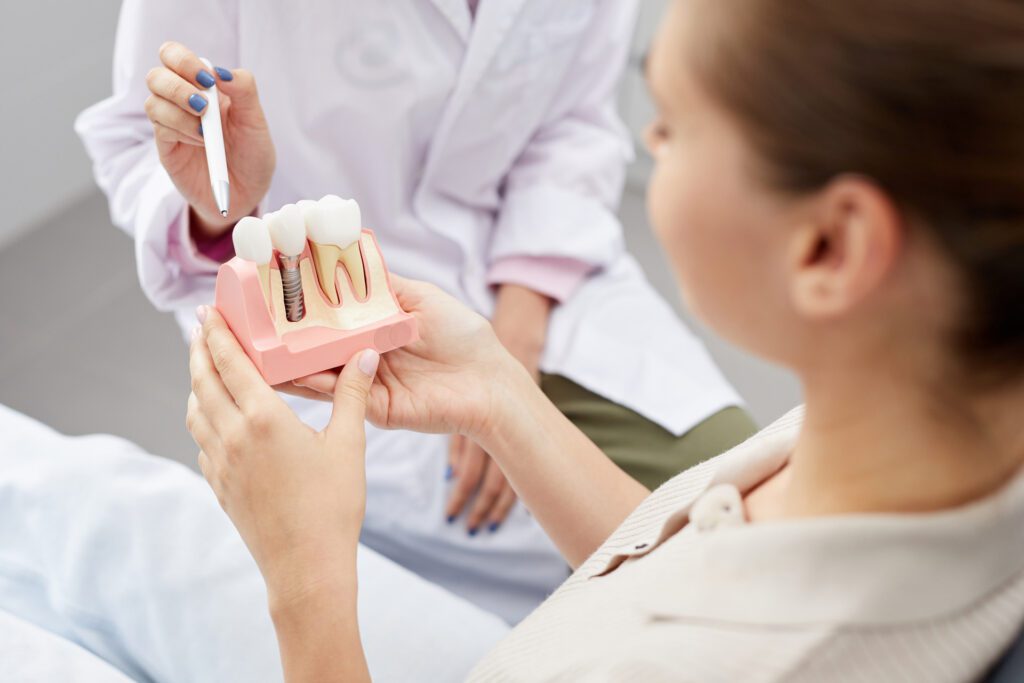
A missing tooth isn’t just a cosmetic issue. It affects how you chew, how you speak, how you feel when you smile — and over time, it can even change the shape of your face as your jawbone begins to deteriorate without a tooth root to stimulate it. If you’ve been living with a gap in your smile — whether from an extraction, an accident, or tooth decay — dental implants in Abbotsford BC offer the closest thing to your natural teeth that modern dentistry can provide. And at Medora Dental Care, we’ve helped countless Fraser Valley residents reclaim their smiles with this life-changing treatment. What Are Dental Implants? A dental implant is a small titanium post that is surgically placed into your jawbone to act as an artificial tooth root. Once it integrates with your bone (a process called osseointegration), a custom-made crown is attached on top — giving you a permanent, stable, natural-looking replacement tooth. Unlike dentures, implants don’t slip, click, or require adhesives. Unlike bridges, they don’t require grinding down adjacent healthy teeth. They’re designed to last a lifetime with proper care. Are You a Candidate for Dental Implants? Most adults with good general health are candidates. The ideal implant patient typically has: One or more missing or severely damaged teeth Adequate jawbone density to support the implant Healthy gums free from periodontal disease Good overall health and no conditions that impair healing Patients who smoke or have conditions like uncontrolled diabetes may need additional evaluation. During your consultation at Medora Dental Care, we’ll assess your specific situation and walk you through all your options. The Dental Implant Process at Medora Dental Care We believe in making the implant journey as clear and stress-free as possible. Here’s what you can expect: Step 1: Initial Consultation & Examination We take detailed X-rays, evaluate your bone density, gum health, and overall oral health. We discuss your goals, answer all your questions, and create a personalized treatment plan — including a clear cost breakdown. Step 2: Bone Grafting (If Needed) If your jawbone has deteriorated due to tooth loss, a bone graft may be required before implant placement. This adds volume and strength to ensure the implant has a solid foundation. Not every patient needs this step. Step 3: Implant Placement Under local anesthesia (or sedation if preferred), the titanium post is placed into your jawbone. Most patients describe the procedure as far more comfortable than they expected — often less intense than a tooth extraction. We also offer sedation dentistry for patients who want to be completely relaxed during the procedure. Step 4: Healing & Osseointegration Over the next 3–6 months, your implant fuses with your jawbone. During this healing period, you’ll receive a temporary crown to maintain appearance and function. Step 5: Crown Placement Once healing is complete, your permanent, custom-crafted crown is attached. It’s matched precisely to the colour and shape of your natural teeth — so nobody will ever know it’s an implant. Dental Implants vs. Other Tooth Replacement Options Why choose implants over dentures or bridges? Here’s a quick comparison: Dental Implants: Permanent, bone-preserving, no impact on adjacent teeth, feels natural, lasts 20+ years with care Dental Bridges: Requires grinding down adjacent teeth, doesn’t prevent bone loss, may need replacement in 10–15 years Dentures: Removable, can slip or cause discomfort, bone continues to deteriorate, requires adhesives For most patients who are candidates, implants offer superior long-term value — for your health, your comfort, and your confidence. Already exploring bridges? Read more about dental bridges in Abbotsford to compare your options. How Much Do Dental Implants Cost in Abbotsford, BC? Dental implant costs vary depending on several factors: the number of implants, whether bone grafting is needed, and the type of crown used. In Canada, a single implant typically ranges from $3,000 to $5,000+ including the crown. While this may seem significant upfront, consider that implants are designed to last a lifetime — making them more cost-effective than alternatives that need to be replaced every 10–15 years. We offer payment plans and will help you maximize your dental insurance benefits. Why Choose Medora Dental Care for Implants in Abbotsford? Experienced implant dentists with a gentle, precise approach Personalized treatment plans tailored to your anatomy and goals Advanced imaging for accurate implant placement Sedation options for a completely comfortable experience Transparent pricing with no hidden fees Convenient location serving all of the Fraser Valley Complementary Services That Enhance Your Implant Results Many implant patients also explore porcelain veneers or teeth whitening to create a complete smile transformation. We also offer dental crowns in Abbotsford as standalone restorations for damaged teeth that don’t require extraction. Maintaining healthy gums is essential for implant success — learn about our periodontal treatment services. Frequently Asked Questions About Dental Implants Q: Does getting a dental implant hurt? Most patients report that the procedure is less uncomfortable than expected, thanks to effective local anesthesia. Post-procedure soreness is typically manageable with over-the-counter pain relievers. For anxious patients, we offer sedation options. Q: How long do dental implants last? With proper care — regular brushing, flossing, and dental check-ups — dental implants can last 20 years or more. Many patients have implants that last a lifetime. Q: Can I get an implant if I’ve had bone loss? Often yes — a bone graft can restore sufficient bone density to support an implant. We’ll evaluate this during your consultation and advise on the best approach. Q: Will my implant look natural? Absolutely. Your crown is custom-crafted to match the colour, size, and shape of your surrounding teeth. Even your closest friends won’t be able to tell the difference. Q: How soon can I eat normally after an implant? Most patients resume a soft diet within days of implant placement and eat fully normally once the crown is fitted. We’ll give you detailed post-operative care instructions.

Cosmetic Dentistry, Implants

How Long Do Dental Implants Last? Key Factors to Consider 

Dental implants last 20-25 years or longer when properly cared for and maintained. They stand out as one of the most durable and reliable options to replace teeth in modern dentistry.  Your dental implant’s lifespan can vary by a lot based on several factors. Oral hygiene habits, overall health, and lifestyle choices play crucial roles. These implants offer a permanent solution, but their durability depends on good maintenance and avoiding harmful habits like smoking.  This piece gets into what makes dental implants last longer, along with everything in maintenance, potential risks, and ways to protect your investment in oral health. You’ll discover the key factors behind successful implants and learn how to make them last longer through proper care.  Understanding Dental Implant Longevity  Studies show remarkable results about how long dental implants last. A study conducted at the University of Alberta’s School of Dentistry over a 10-year period found an impressive implant survival rate of 99.7%. We have a long way to go, but we can build on this progress to understand their longevity better.  Average lifespan of dental implants  Research from the Royal College of Dental Surgeons of Ontario (RCDSO) indicates the following cumulative survival rates for dental implants:  96.7% at 5 years  92.5% at 10 years  86% at 15 years  Factors affecting implant success rates  These factors play a crucial role in implant longevity:  Bone quality and density – Type I bone achieves 90.9% survival rate. Type IV bone shows better results with 97.41% success  Patient age – People over 60 years face higher failure rates  Implant specifications – Failure rates increase with implants longer than 11.5mm and those narrower than 3.75mm  Medical conditions – Diabetes, cardiovascular diseases, and autoimmune disorders can affect healing and integration  Different types of dental implants and their durability  Two main types of dental implants show different durability patterns. Endosteal implants made from titanium or ceramic go directly into the jawbone and achieve the best long-term success. These implants create a stable foundation by bonding with bone tissue through osseointegration.  Subperiosteal implants sit under the gums but above the jawbone. They work well when traditional implants aren’t possible. They’re nowhere near as stable as endosteal implants.  Mini dental implants (MDIs) provide a less invasive option with their narrower diameter. Scientists designed them to last permanently, but research about their long-term success continues to emerge.  Essential Maintenance for Long-Lasting Dental Implants  Dental implants need proper maintenance to last as long as possible. A detailed maintenance plan that combines daily care and professional oversight substantially affects success rates. Research indicates patients should schedule hour-long maintenance visits every three months to assess changes in their oral and general health.  Daily care routine for implants  Patients need to clean their implants twice daily with a soft-bristled toothbrush and non-abrasive toothpaste. Flossing and interdental brushes help remove trapped food particles and stop plaque from building up around implants. Using an antibacterial mouthwash helps keep bacteria under control and prevents infections.  Professional maintenance schedule  Dental professionals recommend check-ups every three months. They use specialized tools that work safely with implant materials during these visits. Modern powder air flow polishing systems remove biofilm from implant surfaces effectively. Titanium implant scalers work best to clean titanium implant surfaces.  Signs of potential problems to watch for  Look out for these warning signs with your implants:  Gum irritation or redness around the implant  Implant mobility or looseness  Persistent pain or swelling  Exposure of the metallic post under the gumline  Spotting these problems early makes a big difference. Conditions like peri-implantitis can get worse faster when left untreated. Contact your dental professional right away if you notice any changes in your implant’s stability or the health of surrounding tissue.  Risk Factors That Can Shorten Implant Lifespan  Dental implant lifespan can substantially decrease due to health conditions and daily habits. Studies reveal that dental implants generally succeed, but certain risk factors can make them two to three times more likely to fail.  Medical conditions affecting implant success  Diabetes creates unique challenges for patients with dental implants. Research suggests that uncontrolled diabetes leads to slower healing and raises the risk of implant complications. Autoimmune conditions and heart diseases can affect implant success. Recent studies show that well-managed conditions don’t substantially change implant survival rates.  Lifestyle habits to avoid  Smoking emerges as the main risk factor. Studies reveal failure rates of 11% in smokers versus 5% in non-smokers. The upper jaw shows even worse results, with smokers’ failure rates nearly tripling. Other harmful habits include:  Heavy alcohol use that causes dry mouth and weakens nearby tissues  Teeth grinding that puts too much force on implants  Poor stress control that slows healing and weakens immune response  Impact of oral hygiene practices  Poor oral hygiene leads to implant failure through peri-implantitis, an infection that damages the implant’s supporting structures. Studies show smokers with poor oral hygiene lost three times more bone over 10 years compared to non-smokers. Professional cleanings and proper daily care reduce these risks substantially. Research shows consistent maintenance prevents most hygiene-related problems.  Maximizing Your Dental Implant Investment  Dental implants need a large upfront investment, but their durability and functionality make them worth the cost. Studies reveal that implant restorations become more economical than conventional bridges after 7 years and need less maintenance.  Cost comparison with other tooth replacement options  A single tooth implant costs between CAD 1,393 and CAD 8,360. The long-term expenses tell a different story:  Traditional dentures need replacement every 5-7 years  Bridges last 5-15 years before needing replacement  Dental implants can last a lifetime with proper care  Insurance and warranty considerations  Dental insurance plans cover implants differently. Some plans partly cover the costs while others don’t cover implants. Leading implant manufacturers offer lifetime warranties on their products  Long-term value assessment  Dental implants prove more valuable than other treatment options. They protect the jawbone structure and stop adjacent teeth from moving, which leads to better oral health. Research on full-mouth restoration shows that implants improve oral health-related quality of life despite higher upfront

Scroll to Top