
Quick answer: Teeth whitening strips can lighten teeth by about 1–2 shades over one to two weeks and work best on mild, surface-level stains. Professional whitening uses a stronger, dentist-applied gel that can brighten teeth by up to eight shades in a single visit and can treat staining that strips physically can’t reach.
If you’ve stood in the drugstore aisle staring at a box of whitening strips wondering whether they’re worth it — or whether you should just book a professional treatment — you’re asking the right question. Both options use the same basic chemistry (peroxide-based bleaching), but they behave very differently once they’re on your teeth. This guide breaks down exactly what strips can and can’t do, when they’re a smart choice, and when it’s worth seeing a dentist instead.
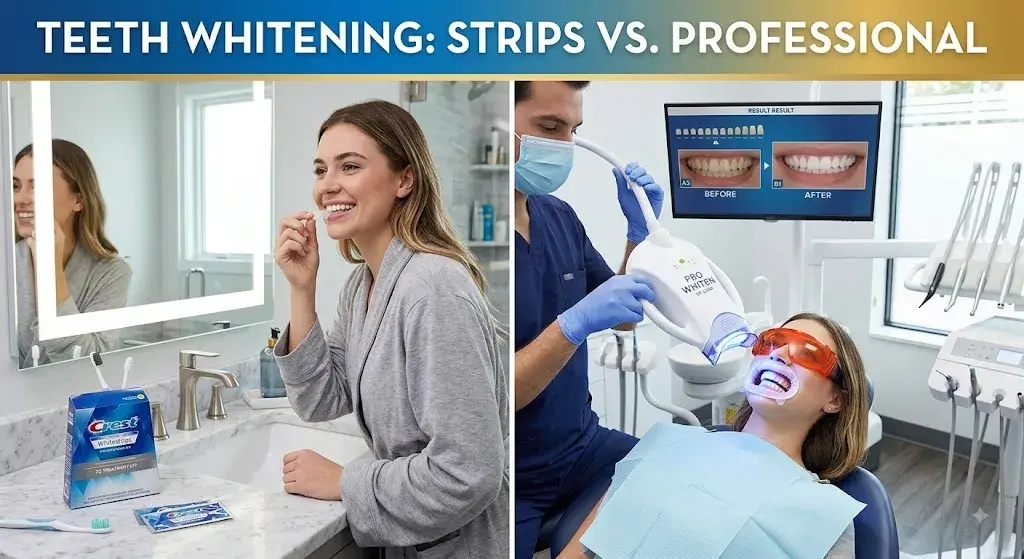
How Do Teeth Whitening Strips Work?
Whitening strips are thin, flexible pieces of plastic coated with a peroxide-based whitening gel — usually hydrogen peroxide or carbamide peroxide at low concentrations, roughly 3% to 10%. You press them directly onto your teeth for 30 minutes to an hour a day, typically for one to two weeks, and the peroxide slowly breaks down surface stain molecules.
The strip’s shape is where the limitations start. It’s a flat, generic piece of plastic — not molded to your mouth — so it can’t fully hug the curve of every tooth or reach between teeth, around crowding, or along the gumline the way a custom tray or an in-office application can. That means some teeth (and some parts of each tooth) simply get less contact time with the gel than others.
What’s Actually in the Gel
Most reputable strip brands use one of two active ingredients: hydrogen peroxide, which acts quickly but breaks down fast once applied, or carbamide peroxide, which releases hydrogen peroxide more slowly over the wear time. Both work the same way chemically — the peroxide molecule breaks apart stain compounds within the enamel’s outer layers through oxidation. The concentration is what separates drugstore products from professional ones; strips are capped at low percentages specifically so they’re safe to use without supervision. Look for products carrying a recognized dental association seal, since that indicates the formula has been independently reviewed for safety and effectiveness rather than just marketing claims.
Teeth Whitening Strips vs. Professional Whitening: Side-by-Side
| Whitening Strips | Professional Whitening | |
| Peroxide strength | 3%–10% | 15%–43% (in-office); 10%–22% (take-home trays) |
| Time to see results | 1–2 weeks of daily use | One 60–90 minute visit (in-office) |
| Typical shade change | 1–2 shades | Up to 8 shades |
| Coverage | Uneven — misses gaps, crowding, gumline | Even — custom trays or clinician-applied gel |
| Supervision | None | Dentist evaluates teeth and gums first |
| Handles intrinsic stains | No | Better suited, though not guaranteed |
| Approx. results last | 2–4 months | 6 months–3 years, with maintenance |
For a full cost breakdown of professional options in Abbotsford, including in-office and take-home tray pricing, see our teeth whitening cost guide.
What Whitening Strips Can’t Fix — Even With Perfect Use
No matter how carefully you follow the instructions, strips have real limits:
- Intrinsic stains — discoloration from aging, certain medications (like tetracycline), fluorosis, or old dental trauma sits inside the tooth structure, not on the surface. Strips only work on surface stains.
- Dental restorations — whitening strips don’t change the colour of crowns, veneers, bonding, or fillings, so a strip routine can leave natural teeth brighter than existing restorations, creating a mismatch.
- Crowded or overlapping teeth — the flat strip can’t press evenly against teeth that overlap or sit at an angle, which often leads to visibly patchy results.
- Deep or long-standing stains — years of coffee, tea, red wine, or tobacco staining usually need a stronger gel and longer contact time than an OTC strip provides.
Are Teeth Whitening Strips Safe to Use?
Generally, yes — when used exactly as directed. Health Canada-regulated OTC whitening products use low enough peroxide concentrations that serious harm is uncommon. That said, strips aren’t risk-free:
- Overuse (leaving strips on longer than directed, or using them more often than the box recommends) can wear on enamel and cause gum irritation.
- Strips that shift during wear can expose gum tissue to peroxide gel, causing temporary white patches or soreness.
- Using strips over untreated cavities, cracked teeth, or active gum disease can cause pain, since the peroxide can reach the nerve through compromised enamel.
- People with existing tooth sensitivity often find strips uncomfortable, since there’s no clinician adjusting strength or timing for their specific teeth.
If you want the full breakdown of safe whitening practices — including how to choose the right method for sensitive teeth — our safe teeth whitening guide covers professional and at-home safety considerations in detail.
Common Mistakes People Make With Whitening Strips
- Skipping a dental check-up first, and not realizing a cavity or gum issue was there until the strips cause pain.
- Leaving strips on longer than the package directs, thinking more time equals better results.
- Using strips right after eating or drinking, without brushing first, which reduces how well the gel contacts enamel.
- Expecting strips to match the results of a professional treatment, then feeling disappointed by a subtle change.
- Continuing daily use for weeks past the recommended course, which raises the risk of sensitivity without meaningfully improving results.
When Strips Are a Good Choice — and When to See a Dentist Instead
Whitening strips make the most sense for people with mild, surface-level staining who want a low-cost, low-commitment way to test whether whitening is worth pursuing further, or who need a light touch-up between professional treatments. They’re a reasonable starting point, not a universal solution.
A dentist visit is the better move if any of the following apply:
- Your staining is intrinsic, uneven, or long-standing
- You have crowns, veneers, or visible fillings you want to match
- You have sensitive teeth, crowded teeth, or untreated dental issues
- You want dramatic, predictable results before an event
- You’ve already tried strips and weren’t satisfied with the result
Our teeth whitening page outlines the in-office and take-home professional options available at Medora Dental Care, including whitening designed specifically for sensitive teeth.
Tips to Get the Best Results From Whitening Strips
- Brush (don’t just rinse) before applying, so the gel contacts clean enamel.
- Follow the wear time exactly — longer isn’t better and raises sensitivity risk.
- Press strips firmly along the gumline to reduce gel movement during wear.
- Avoid coffee, tea, red wine, and other staining foods for at least 30 minutes after removing strips, since enamel is temporarily more porous.
- Book a quick dental check-up first if it’s been more than six months since your last cleaning, to rule out cavities or gum issues before starting.
Frequently Asked Questions
Do teeth whitening strips actually work?
Yes, for mild surface staining. Most people see a 1–2 shade improvement after a full course of daily use over one to two weeks. Strips are less effective on deeper or intrinsic stains.
Are teeth whitening strips safe for daily use?
They’re generally safe when used exactly as the package directs, for the recommended number of days. Using them more often or longer than instructed increases the risk of gum irritation and tooth sensitivity.
How long do results from whitening strips last?
Typically two to four months, depending on diet and habits like smoking or drinking coffee, tea, or red wine. Professional whitening results generally last considerably longer — from six months to a few years with maintenance.
Can whitening strips damage your teeth?
Used as directed, strips are unlikely to cause lasting damage. Overuse, or applying them over untreated cavities or exposed gum tissue, can cause temporary sensitivity or irritation — which is why a dental check-up beforehand is worth it if you haven’t had one recently.
Are whitening strips or professional whitening better value?
It depends on your goals. Strips cost less upfront but need repeat purchases and deliver modest results. Professional whitening costs more per treatment but produces a bigger shade change that lasts longer, which often makes the cost per month of white teeth comparable or lower.
Can I use whitening strips if I have crowns or veneers?
Strips won’t damage crowns or veneers, but they also won’t whiten them — only natural enamel responds to peroxide gel. If you have visible restorations, a consultation is the better route so your dentist can plan around matching your shade.
Can I switch from strips to professional whitening later?
Yes, and many patients do exactly that. Strips are sometimes used first as a low-cost way to gauge how a patient’s teeth respond to peroxide, then professional treatment is used to finish the job and reach the target shade in one sitting. If you’ve already used strips without much change, mention that during a consultation — it helps your dentist judge whether your staining is more intrinsic than extrinsic before recommending a treatment plan.
Not sure which option fits your teeth? Contact Medora Dental Care to book a whitening consultation, or call (604) 746-1295 — Dr. Ash and our Abbotsford cosmetic team can tell you honestly whether strips will do the job or whether professional whitening is worth the investment for your smile.